CN
CN français
 English
 русский
 español
 português
 ไทย
ไทย Indonesia
 Tiếng việt
 العربية
 فارسی
فارسی


Introduction
Dans l'industrie céréalière moderne, le contrôle qualité est plus crucial que jamais. Le riz, aliment de base pour plus de la moitié de la population mondiale, doit satisfaire à des normes de qualité toujours plus strictes avant d'être commercialisé. C'est là qu'intervient la trieuse optique du riz : une merveille technologique qui a révolutionné le fonctionnement des rizeries.
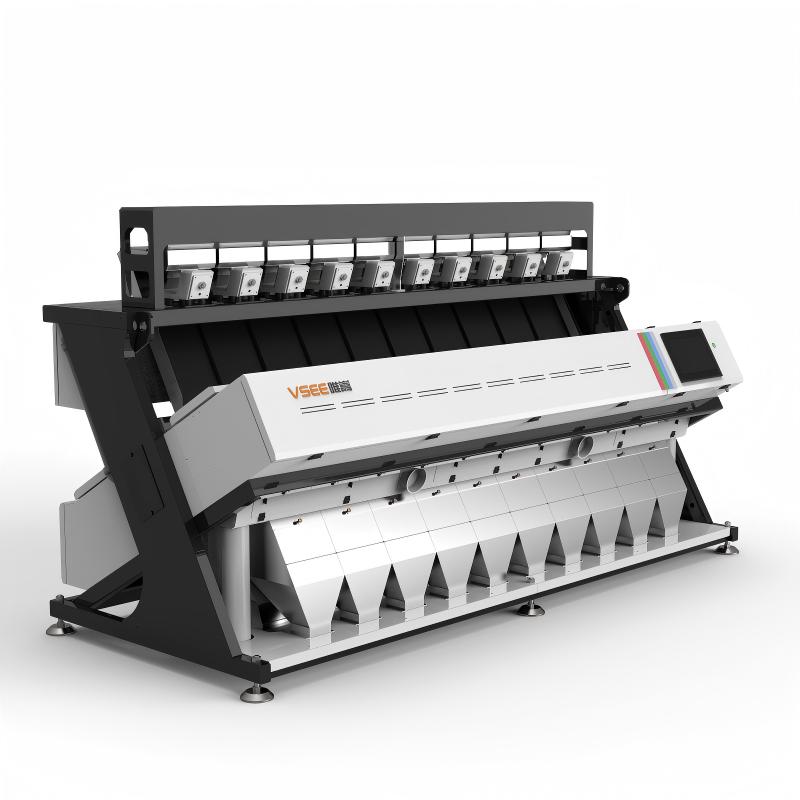
Une trieuse optique de riz, également appelée machine de tri optique de riz, est un appareil automatisé qui sépare les grains de riz en fonction de leurs différences de couleur grâce à la technologie photoélectrique. Ces machines trient automatiquement les particules hétérochromatiques du riz brut, éliminant les impuretés telles que les cailloux, le riz de mauvaise qualité, le riz noir et les grains partiellement décortiqués. Il en résulte un produit final de qualité élevée et constante, conforme aux normes des marchés nationaux et internationaux.
Comment fonctionne un trieur de riz par couleur ?
Le principe de fonctionnement d'une trieuse optique de riz combine l'optique, l'électronique et la pneumatique en un système automatisé parfaitement intégré. Voici le processus étape par étape :
1. Alimentation en matière – Le riz entre par la trémie supérieure et est réparti uniformément par un alimentateur vibrant, lui permettant de glisser le long des canaux dans un flux monocouche.
2. Balayage optique – Lorsque les grains de riz traversent la zone d'observation de la chambre de tri, des caméras CCD haute résolution ou des capteurs CMOS capturent des informations sur leur couleur, leur forme et leur texture. Les modèles les plus avancés intègrent une technologie de reconnaissance multispectrale capable de capturer les spectres visibles et infrarouges proches, identifiant ainsi des différences subtiles difficilement perceptibles à l'œil nu.
3. Traitement d'images – Les données capturées sont transmises à une unité de traitement où des algorithmes intelligents analysent chaque grain individuellement. Les machines modernes utilisent des algorithmes d'apprentissage profond d'IA pré-entraînés sur des millions d'images de défauts de riz, notamment des grains crayeux, des enveloppes décolorées, des stries noires à l'extrémité et des corps étrangers.
4. Éjection précise – Lorsqu'un grain défectueux ou une impureté est détecté, le système active des électrovannes à haute vitesse (temps de réponse inférieur à 2 millisecondes) pour expulser les particules indésirables à l'aide d'air comprimé. Les produits conformes poursuivent leur trajectoire vers la cavité du produit fini.
Qu'est-ce qu'un trieur de riz par couleur peut éliminer ?
Les trieuses de riz modernes sont remarquablement polyvalentes. Elles peuvent éliminer efficacement :
Riz strié et grains moisis
Grains blanc crayeux et grains verdâtres immatures
Grains rouges et tachés dus à un séchage inadéquat
Fragments de verre, pierres et particules de plastique
Riz brisé et grains semi-moulus
Pointes décolorées dues à des dommages fongiques
Le passage du tri manuel au tri automatisé
Le tri manuel traditionnel est une tâche fastidieuse, chronophage et peu fiable. Il entraîne généralement un gaspillage de 5 à 8 % de grains de bonne qualité, tandis que le tri automatisé de précision réduit les pertes dues aux erreurs de tri à moins de 0,5 %. Comparées au tri manuel, les trieuses optiques de riz permettent de gagner du temps et de la main-d'œuvre, offrent une efficacité élevée et un faible coût, et contribuent à améliorer la qualité du produit et la rentabilité.
IA et apprentissage profond : la prochaine frontière
L'industrie délaisse la séparation optique traditionnelle basée sur les capteurs CCD au profit de systèmes intelligents capables de reconnaître la couleur, la forme, la texture et même les défauts internes. Les principaux fabricants proposent désormais des trieuses dotées d'intelligence artificielle, offrant une résolution ultra-nette de 350 millions de pixels et une précision d'identification de 0,15 mm. La précision du tri peut désormais dépasser 99,9 %, certains modèles phares atteignant même 99,99 % à pleine charge.
Croissance du marché et perspectives d'avenir
Le marché mondial des trieuses optiques de riz connaît une croissance soutenue. Selon une étude de marché, le marché des trieuses optiques de riz à proche infrarouge a atteint à lui seul environ 868 millions de yuans (123 millions de dollars US) en 2025, et devrait avoisiner 1,35 milliard de yuans (196 millions de dollars US) d'ici 2032, soit un taux de croissance annuel composé de 6,6 à 6,8 %. Les principales tendances qui façonnent ce marché sont la reconnaissance des défauts par apprentissage profond, la surveillance à distance, la compatibilité multi-matériaux et la numérisation de la chaîne d'approvisionnement.
Conclusion
Les trieuses optiques de riz sont devenues des équipements indispensables dans l'industrie de la transformation des céréales. Que vous exploitiez une petite minoterie familiale ou une grande usine de transformation industrielle, investir dans une trieuse optique de riz de qualité est essentiel pour maintenir la qualité de vos produits, réduire les déchets et rester compétitif sur un marché exigeant.
Subscribe & Get More Information
Continuez à lire, restez informé, abonnez-vous et nous vous invitons à nous dire ce que vous en pensez.

Appelez-nous : +8613655554449


droits d'auteur
© 2026 Anhui Vsee Optoelectronic Technology Co., Ltd. Tous droits réservés.
Plan du site
| Blogue
| Xml
| politique de confidentialité
 RÉSEAU PRIS EN CHARGE