CN
CN français
 English
 русский
 español
 português
 ไทย
ไทย Indonesia
 Tiếng việt
 العربية
 فارسی
فارسی


Les chiffres sont formels. Le marché mondial des systèmes automatisés de tri du verre recyclé était évalué à environ543 millions de dollars en 2024** et devrait croître à un taux de croissance annuel composé (TCAC) de 8,5 % au cours de la période de prévision.Le marché plus large des machines de tri pour le recyclage du verre devrait atteindre 1,5 milliard de dollars d'ici 2033., avec une croissance annuelle de 10 %.Parallèlement, le marché mondial des trieuses optiques pour le recyclage devrait passer de 1,5 milliard de dollars en 2023 à 3,2 milliards de dollars d'ici 2032.
Qu’est-ce qui explique cette croissance explosive ? Plusieurs facteurs puissants convergent pour faire des trieuses de verre par couleur l’un des segments les plus dynamiques de l’industrie des équipements de recyclage.
Partout dans le monde, les gouvernements adoptent des réglementations environnementales plus strictes et fixent des objectifs de recyclage ambitieux. Le plan d'action pour l'économie circulaire de l'Union européenne, les dispositifs de responsabilité élargie des producteurs (REP) et la hausse des taxes sur la mise en décharge contraignent les entreprises de gestion des déchets et les fabricants de verre à adopter des normes plus élevées. Les recycleurs ne se contentent plus d'« éliminer » les déchets : ils sont désormais tenus de les produire.contenu recyclé de haute puretéqui peuvent réintégrer les chaînes d'approvisionnement industrielles.
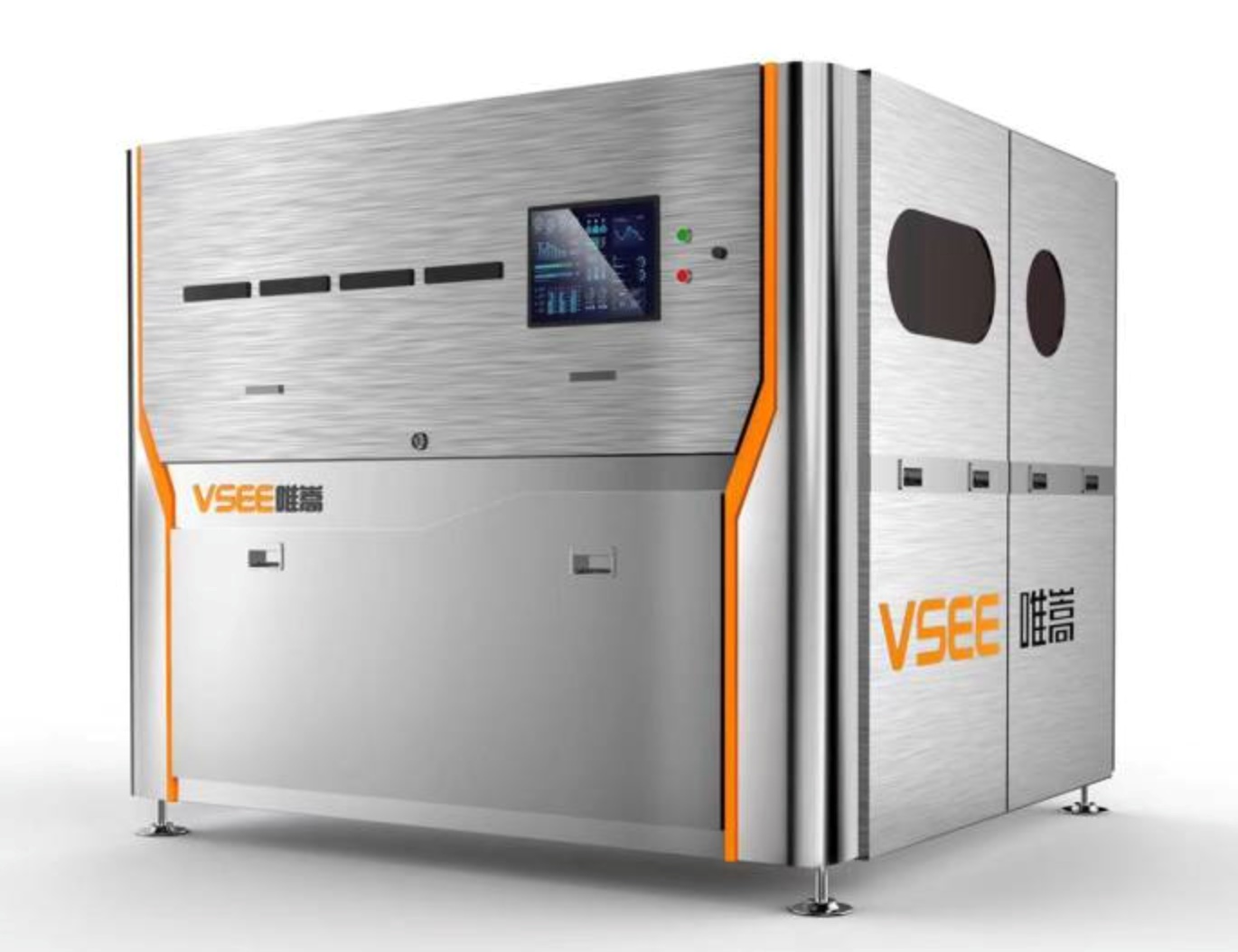
Le tri du verre occupe une place unique dans ce contexte. Le verre usagé fond à des températures nettement inférieures à celles des matières premières vierges (sable siliceux, calcaire, carbonate de sodium), ce qui permet d'économiser de l'énergie thermique coûteuse et de réduire les émissions de carbone. Toutefois, cet avantage énergétique ne se concrétise que si le calcin est propre. Le verre contaminé ou de couleurs mélangées a une valeur marchande moindre et peut être destiné à des applications moins valorisables, comme la production de granulats ou le revêtement des décharges. Un trieur de verre par couleur permet de pallier directement ce problème en transformant le calcin mélangé et contaminé en matière première prête à l'emploi dans les fours.
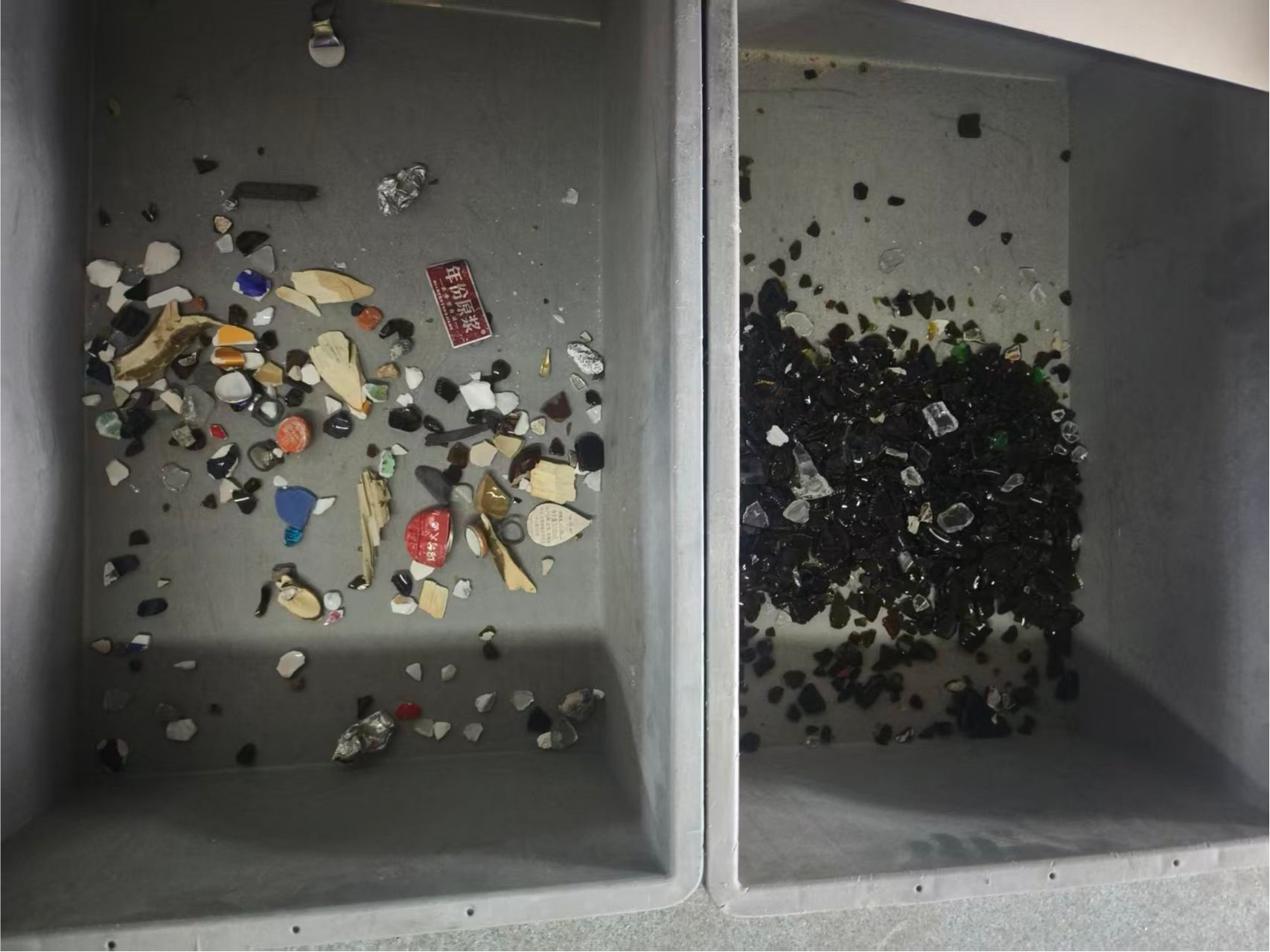
Les fabricants de verre d'emballage — ceux qui produisent des bouteilles de bière, de vin et des bocaux alimentaires — imposent des spécifications strictes concernant le calcin recyclé. Le verre clair (verre blanc) ne tolère aucune contamination par du verre ambré ou vert. Le verre résistant à la chaleur (borosilicate), la céramique, la pierre et la porcelaine (communément appelée CSP) sont tous interdits dans les fours de fusion car ils provoquent des défauts ou endommagent les revêtements.
Alors que les grandes marques de boissons et d'aliments s'engagent à utiliser des pourcentages plus élevés de contenu recyclé dans leurs emballages, la demande de calcin propre et trié par couleur a explosé. Les machines de tri du verre capables d'atteindre une pureté supérieure à 99 % et de séparer les couleurs avec précision ne sont plus un simple atout, mais une nécessité.nécessité stratégiquepour les verriers comme pour les recycleurs.
Les premiers trieurs optiques étaient coûteux, complexes à utiliser et nécessitaient une maintenance importante. Les machines actuelles sont bien plus accessibles. L'intégration de l'IA a simplifié la configuration : les opérateurs peuvent paramétrer un trieur en lui fournissant simplement des échantillons de matériaux « bons » et « mauvais ». Des algorithmes d'auto-ajustement en temps réel maintiennent les performances même en cas de variations de la qualité des matériaux entrants. Leur conception compacte et modulaire réduit l'encombrement, rendant ainsi la technologie de tri avancée accessible aux installations de taille moyenne et même aux plus petits exploitants.
Les principales tendances technologiques qui façonnent le marché sont les suivantes :
Tri optique basé sur l'IAUtilisation de l'apprentissage profond pour identifier les défauts et contaminants subtils
Systèmes hybridescombiner le tri optique avec la séparation par air, la séparation magnétique et les capteurs NIR en un seul passage
Plateformes évolutivesqui permettent de moderniser des machines existantes âgées de 10 à 15 ans avec les dernières capacités d'IA, protégeant ainsi les investissements.
Conceptions écoénergétiquesavec des capteurs intelligents qui minimisent la consommation d'énergie tout en maintenant le débit.
Asie-PacifiqueCette région s'impose comme un pôle de croissance rapide pour les équipements de tri du verre, portée par une industrialisation rapide, une prise de conscience environnementale croissante et l'ampleur considérable de la production de déchets de verre.La Chine produit à elle seule environ 50 millions de tonnes de verre usagé par an. Les fabricants locaux rivalisent agressivement avec les acteurs européens et nord-américains établis, en proposant des solutions rentables qui remettent en question les leaders traditionnels du marché.
Amérique du NordLes États-Unis restent le plus grand marché régional, mais leurs taux de recyclage du verre sont bien inférieurs à ceux de l'Europe : certains États recyclent plus de 70 % des contenants en verre, tandis que d'autres en recyclent moins de 10 %.Cette disparité représente à la fois un défi et une formidable opportunité pour les fournisseurs d'équipements. Avec l'augmentation des investissements des municipalités américaines dans la modernisation des infrastructures de recyclage monomatériau, la demande en équipements de tri devrait s'accélérer.
EuropeL'Allemagne continue de jouer un rôle de premier plan dans l'adoption de mesures réglementaires, avec des pays comme l'Allemagne, l'Autriche et les pays nordiques qui exploitent certains des systèmes de recyclage du verre les plus sophistiqués au monde.
Le contexte concurrentiel est intense. Parmi les leaders établis, on peut citer :
TOMRA(Norvège) — Un acteur majeur du tri optique dans de nombreux secteurs d'activité
Steinert(Allemagne) — Fournisseur de longue date d'équipements de tri magnétiques, optiques et à capteurs
Binder+Co(Autriche) — Connue pour son système CLARITY qui trie le verre par couleur tout en éliminant le CSP en une seule étape
Fabrication CP(USA),Pellenc ST(France),Machinex(Canada), etSesotec(Allemagne) détiennent tous une part de marché importante.
Parallèlement, les fabricants chinois gagnent rapidement du terrain, proposant des prix compétitifs et des technologies de plus en plus sophistiquées. Il en résulte un marché caractérisé par une forte innovation, une baisse des prix et un choix plus vaste que jamais pour les consommateurs.
Si vous envisagez l'achat d'un trieur de verre par couleur — que vous exploitiez un centre de tri, une usine de traitement du verre ou une installation de recyclage intégrée — c'est le moment idéal pour investir. Principaux points à prendre en compte pour votre décision d'achat :
exigences de débit— Les machines vont des petites unités de traitement <500 kg/h pour des systèmes industriels traitant 10 à 70 tonnes par heure
contaminants cibles— Vous enlevez principalement du verre décoloré ? Ou avez-vous également besoin d’enlever du CSP, du métal et du plastique ?
capacités d'IA— Les machines plus récentes dotées d'IA offrent une configuration plus simple et des performances adaptatives
Intégration— Le trieur fonctionnera-t-il avec vos aimants, séparateurs à courants de Foucault et trieurs NIR existants ?
Possibilité de mise à niveau— Le système pourra-t-il être modernisé avec des technologies plus récentes à l'avenir ?
Le marché des trieuses de verre par couleur est en plein essor pour une raison simple : son efficacité. Elle résout l’équation économique fondamentale du recyclage du verre : transformer des déchets contaminés et de faible valeur en matière première de haute valeur, prête à être utilisée dans les fours de recyclage. Face aux pressions croissantes de l’économie circulaire, au durcissement des exigences en matière de contenu recyclé et aux progrès constants de l’intelligence artificielle, cette croissance ne montre aucun signe de ralentissement. Que vous envisagiez de moderniser une installation existante ou d’en construire une nouvelle, investir dans une solution de tri du verre haute performance n’a jamais été aussi pertinent.
Subscribe & Get More Information
Continuez à lire, restez informé, abonnez-vous et nous vous invitons à nous dire ce que vous en pensez.

Appelez-nous : +8613655554449


droits d'auteur
© 2026 Anhui Vsee Optoelectronic Technology Co., Ltd. Tous droits réservés.
Plan du site
| Blogue
| Xml
| politique de confidentialité
 RÉSEAU PRIS EN CHARGE